
I-download ang App
Container Vessel Deck Competence

IMDG Code – General Competence

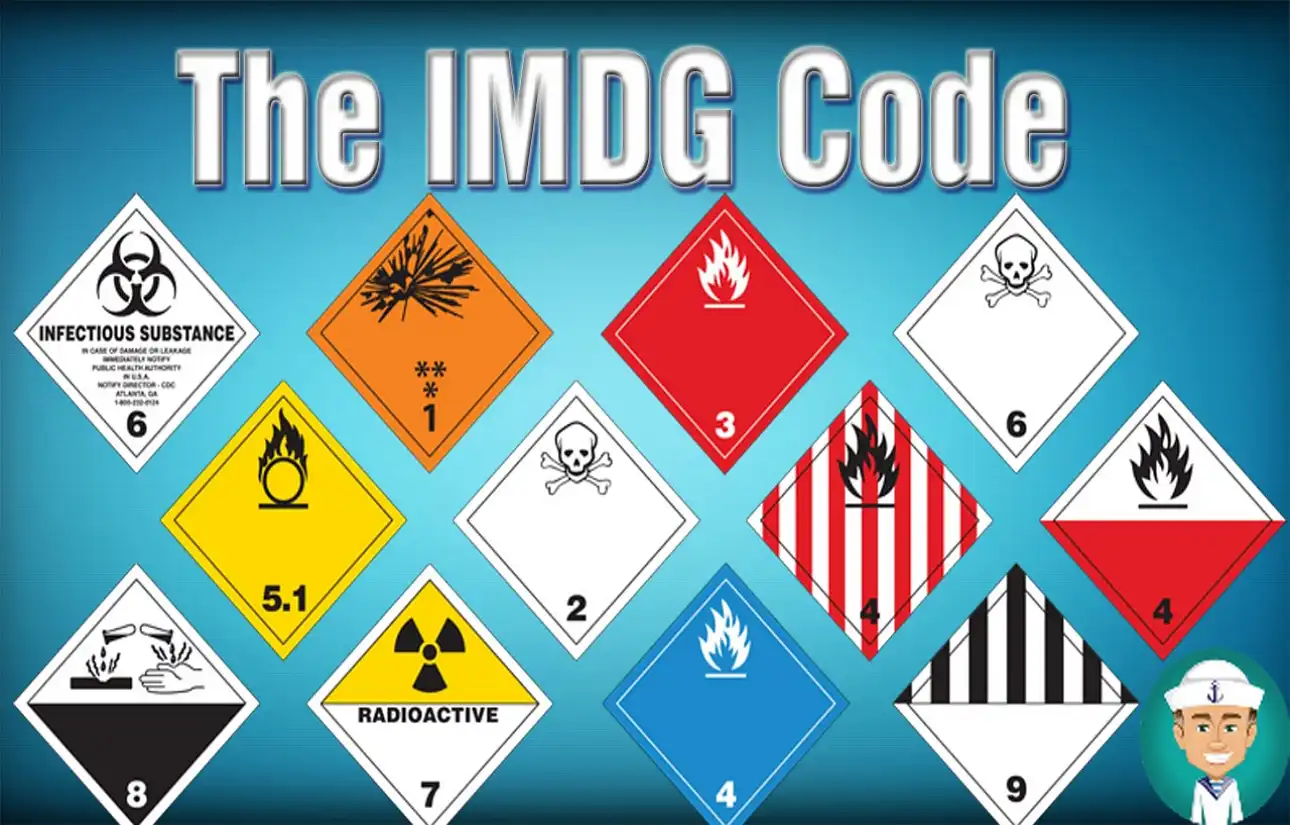
This test evaluates your knowledge of the International Maritime Dangerous Goods – the global standard for the safe transport of hazardous cargo by sea. It covers cargo classification, labeling, documentation, stowage, segregation, and packaging, as well as compliance with safety procedures to prevent accidents, protect life at sea, and safeguard the marine environment.

Mga Tanong 15
Time Limit 9 min
Wika Ingles

Mga Sample na Tanong

Narito ang ilang halimbawang tanong mula sa quiz na ito. I-download ang GYRO app upang kunin ang buong pagsusulit.

Tanong 1

Where should the manifests and cargo plan be stored?

A In the superstructure on or near the bridge.
B In the captain's cabin.
C In the chief officer's cabin.
D In the engine room.

Tanong 2

What defines the classification of a solution or mixture as a marine pollutant?

A A solution or mixture containing more than 10% marine pollutant(s) or 1% of a marine pollutant with extreme pollution potential.
B A solution or mixture containing more than 11% marine pollutant(s) or 1% of a marine pollutant with extreme pollution potential.
C A solution or mixture containing more than 10% marine pollutant(s) or 2% of a marine pollutant with extreme pollution potential.
D A solution or mixture containing more than 10% marine pollutant(s) or 3% of a marine pollutant with extreme pollution potential.

Tanong 3

What goods are considered incompatible?

A Two substances or items are considered incompatible when their stowage together may result in excessive danger in case of leakage, spillage, or any other incident.
B Three substances or items are considered incompatible when their stowage together may result in excessive danger in case of leakage, spillage, or any other incident.
C Four substances or items are considered incompatible when their stowage together may result in excessive danger in case of leakage, spillage, or any other incident.
D Five substances or items are considered incompatible when their stowage together may result in excessive danger in case of leakage, spillage, or any other incident.

Tanong 4

When, how, and why should all packages be inspected?

A All cargo packages must be inspected after loading and at least once every 24 hours to ensure the cargo is in a safe condition, with no damage from shifting or leaks.
B All cargo packages must be inspected after loading and at least once every 48 hours to ensure the cargo is in a safe condition, with no damage from shifting or leaks.
C All cargo packages must be inspected after loading and at least once every 64 hours to ensure the cargo is in a safe condition, with no damage from shifting or leaks.

Tanong 5

If an accident occurred, what should be the primary considerations regarding any actions or proposals?

A Safety of the crew and the vessel.
B Safety and security of the vessel.
C Prevention of marine pollution from the vessel.
D Abandoning the vessel.