
I-download ang App
International Maritime Regulations

COLREG — Regulations for Preventing Collisions at Sea

This test assesses your basic understanding of the International Regulations for Preventing Collisions at Sea (COLREG). The focus is on general definitions, allocation of responsibilities between vessels, principles of safe navigation, and actions in different situations. Navigation lights and day shapes are not included in this module, as they are covered separately.

Mga Tanong 15
Time Limit 9 min
Wika Ingles

Mga Sample na Tanong

Narito ang ilang halimbawang tanong mula sa quiz na ito. I-download ang GYRO app upang kunin ang buong pagsusulit.

Tanong 1
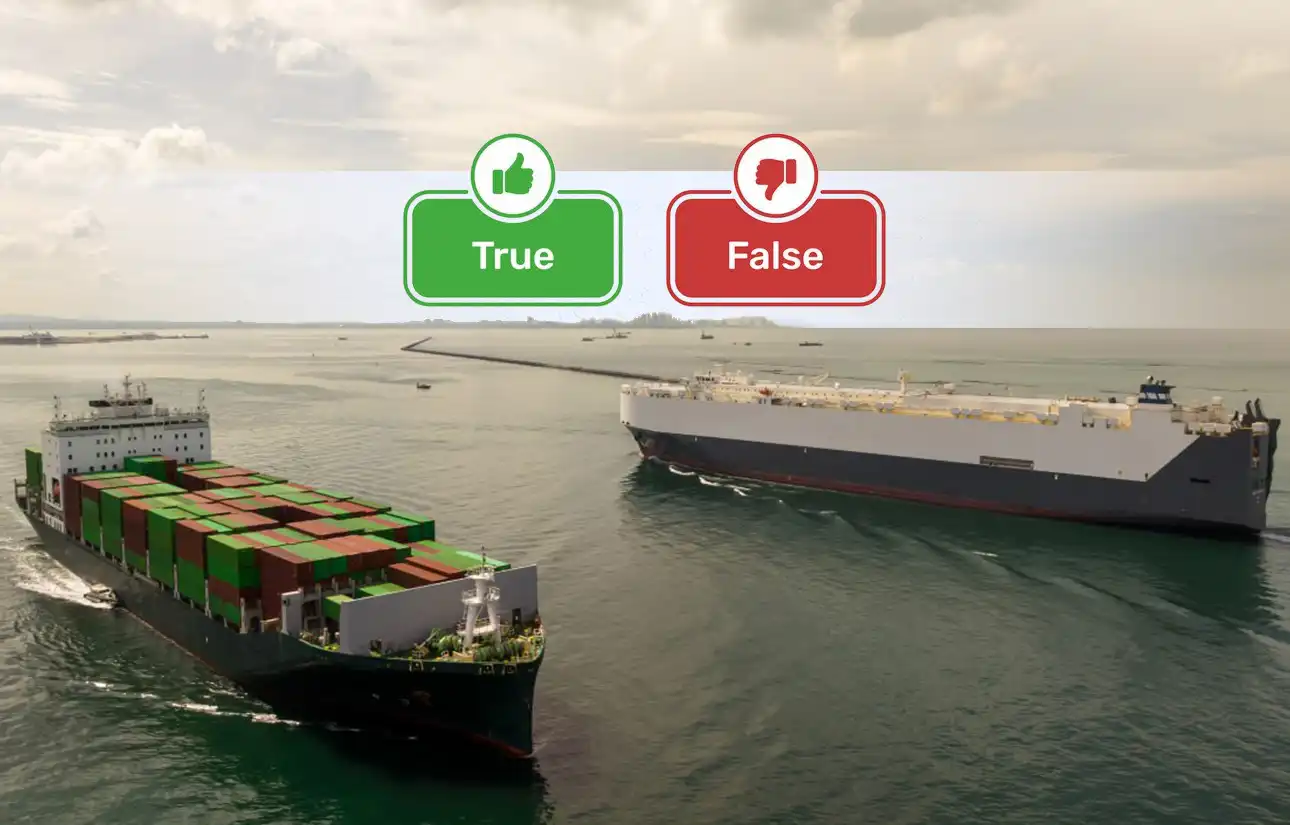
Which vessels are allowed to use the inshore traffic zone according to Rule 10?

A Vessels less than 20 metres in length.
B Sailing vessels.
C Vessels engaged in fishing.
D Vessels restricted in their ability to manoeuvre.
E Large tankers constrained by their draught.
F Any vessel that chooses to avoid traffic lanes.

Tanong 2

You're OOW on a deep-draught tanker in a narrow TSS at night. Visibility is poor due to rain; radar shows intermittent small targets close by. What is the best action regarding speed?

A Reduce speed to ensure you can assess each radar target and take avoiding action.
B Maintain current speed, as radar is functioning and you are in a defined channel.
C Maintain speed but switch to long-range radar only to avoid clutter.
D Increase speed to leave the restricted waterway as quickly as possible.

Tanong 3

Which of the following is a direct quotation from Rule 5?

A “Every vessel shall at all times maintain a proper look-out by sight and hearing".
B “A proper look-out must include AIS tracking and VHF coordination”.
C “Every vessel shall ensure bridge windows are clear for maximum visibility”.
D “All look-outs must use binoculars when on duty”.

Tanong 4

What defines a “vessel not under command” under Rule 3(f)?

A A vessel which cannot manoeuvre due to exceptional circumstances such as steering gear failure.
B A vessel aground, unable to manoeuvre.
C An unmanned vessel.
D A vessel constrained by her draught.

Tanong 5

You observe a vessel dead ahead but only see her red sidelight and one masthead light. What should you conclude?

A This is a crossing situation fromstarboard, you are stand-on.
B You are overtaking, she is slower.
C This is a crossing situation, alter your course to starboard.